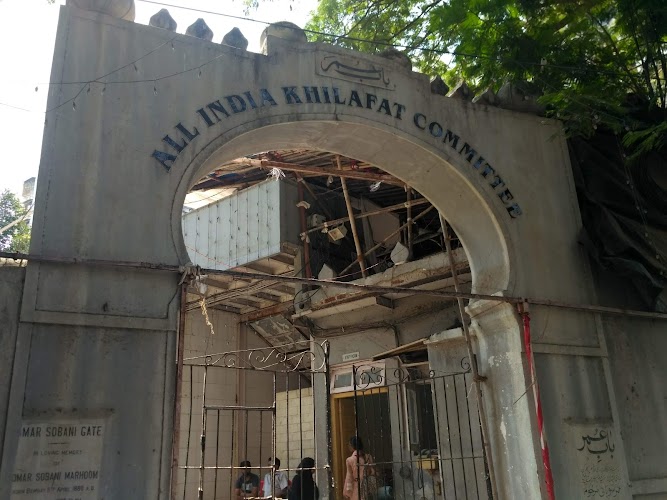
Nice Ac hall for small functions. Also it has a great history of freedom fighters who sacrificed everything for independence.

Wedding hall quite spacious and well maintained....

Good

Khilafat movement, force that arose in India in the early 20th century as a result of Muslim fears for the integrityof Islam. These fears were aroused by Italian (1911) and Balkan (1912–13) attacks on Turkey—whose sultan, as caliph, was the religious head of the worldwide Muslim community—and by Turkish defeats in World War I. They were intensified by the Treaty of Sèvres (August 1920), which not only detached all non-Turkish regions from the empire but also gave parts of the Turkish homeland to Greece and other non-Muslim powers. A campaign in defense of the caliph was launched, led in India by the brothers Shaukat and Muḥammad ʿAlī and by Abul Kalam Azad. The leaders joined forces with Mahatma Gandhi’s noncooperation movementfor Indian freedom, promising nonviolence in return for his support of the Khilafat movement. In 1920 the latter movement was marred by the ḥijrat, or exodus, from India to Afghanistan of about 18,000 Muslim peasants, who felt that India was an apostate land. It was also tarnished by the Muslim Moplah rebellion in south India (Malabar) in 1921, the excesses of which deeply stirred Hindu India. Gandhi’s suspension of his movement and his arrest in March 1922 weakened the Khilafat movement still further. It was further undermined when Mustafa KemalAtatürk drove the Greeks from western Asia Minor in 1922 and deposed the Turkish sultan in the same year; it finally collapsed when he abolished the caliphate altogether in 1924.

One of the ever best place for learning something